RFQ Intake
Capture the commercial and technical identity of the requirement.
Industrial sourcing works better when requirement identity, technical review, commercial comparison and documentation stay connected through the procurement cycle.
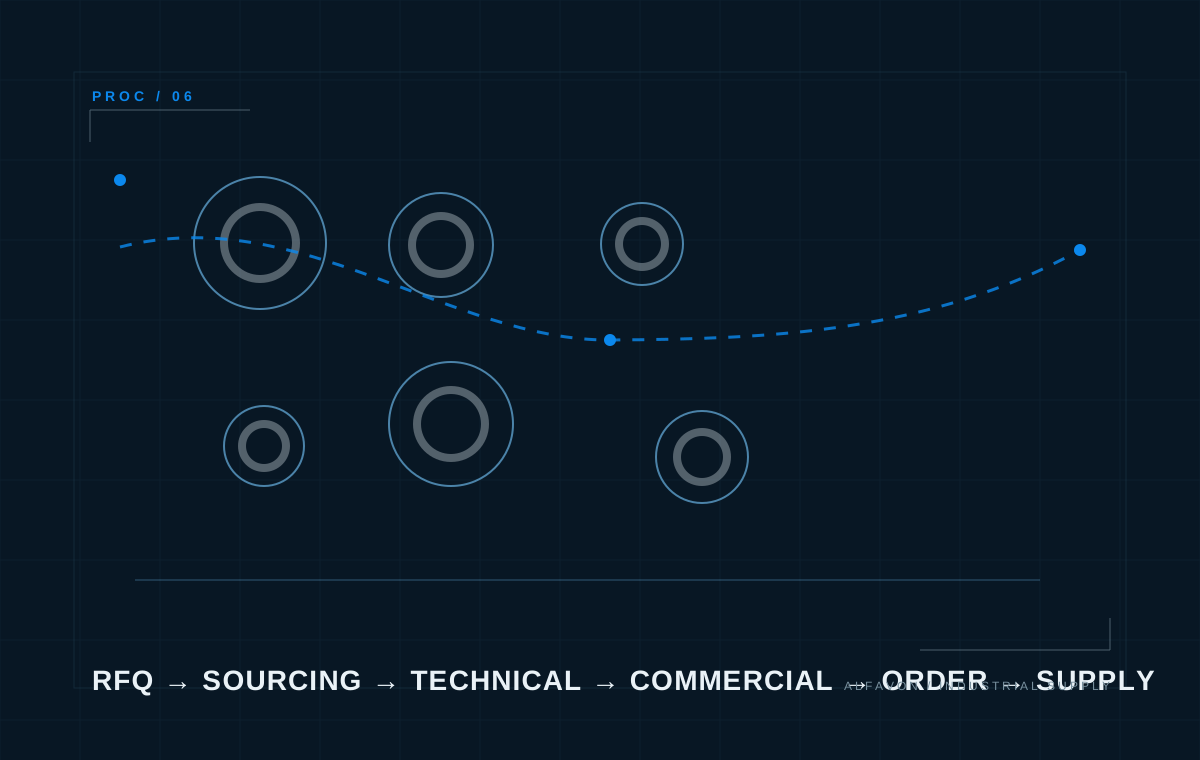
The process separates technical relevance from commercial comparison while keeping the original RFQ visible throughout.
Capture the commercial and technical identity of the requirement.
Identify potential supply options against the requested manufacturer, specification and delivery context.
Organize datasheets, deviations and clarifications so technical relevance can be assessed.
Compare price, lead time, terms and document scope after technical relevance is understood.
Maintain order-related communication and documentation against the agreed scope.
Coordinate the agreed supply path and handover information for international delivery.
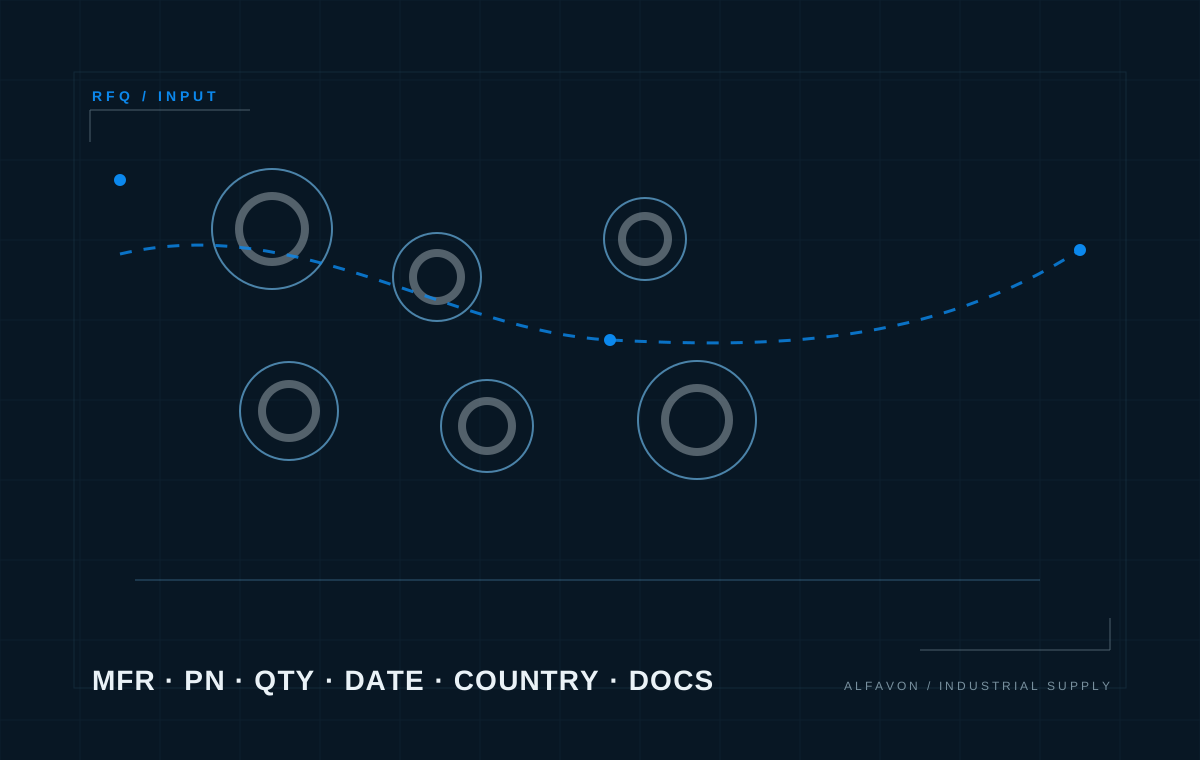
Manufacturer, product description, part number, quantity, delivery date, destination and supporting documents form the practical base of an industrial RFQ.
Datasheets, specifications and deviations should be visible before commercial ranking so price does not hide technical mismatch.
Document requirements can include datasheets, certificates, inspection-related records, packing information and order handover files where specified.
Part numbers, manufacturer references and clear technical specifications reduce ambiguity. Required delivery date and destination make commercial options easier to compare.
Where a manufacturer is mandatory, state it. Where an equivalent may be considered, define the technical boundary for that evaluation. ALFAVON should not infer substitutions that the buyer has not authorized.
Share your requirements with our team and receive a tailored solution for your project.